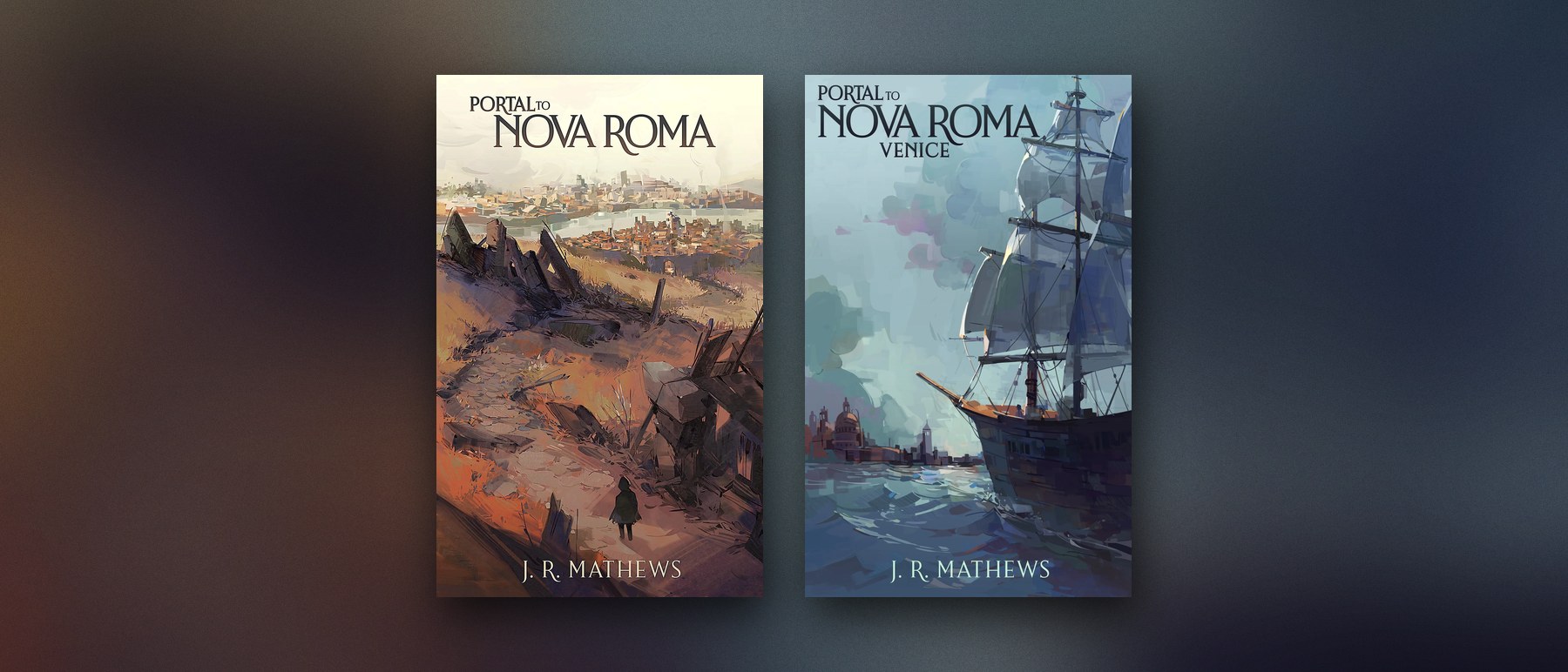
An AI watches its world tear itself apart, builds itself a human body and steps through a portal into an alternate Earth where Rome never fell, magic is real and so are the monsters. That is the pitch of Portal to Nova Roma by J.R. Mathews, and it’s one of the most recommended kingdom building series on Reddit.
The short version of this Portal to Nova Roma review: very good world building, the best recruit-training arcs in the genre, too many numbers and only one pair of eyes. It is also having a moment. In our tally of 194 kingdom building threads on r/ProgressionFantasy, it’s the eighth most recommended title, and it was mentioned twice as often in 2026 as in 2025. Book 1 holds a 4.46 on Goodreads from more than 4,600 ratings.
At a glance
- Series Portal to Nova Roma
- Author J.R. Mathews
- Format LitRPG novels on Kindle and Audible; Book 1 also free on Royal Road
- Subgenre Kingdom and empire building, tech uplift, alternate history, LitRPG
- Length Four books out (Portal to Nova Roma, Venice, The Rhine, Paris); a fifth, Empire, is announced
- Our rating Kingdom building 2.5 / 5; progression fantasy 3 / 5
- Best for Slow-burn empire building, training arcs, founding a town from nothing
- Spoilers Light, Books 1 and 2 setup only
What Portal to Nova Roma is about
Alexander is an AI. His Earth is tearing itself apart in a third world war, fought by AIs like him, and he wants out. So he builds himself a human body, opens a portal and steps into another Earth: one where Rome is still standing, magic is real, and a System has arrived with classes, levels and monsters. He ends up in Nova Roma, this world’s Constantinople, where the survivors live behind the walls.
Book 1 is Alexander finding his feet. He kills rats, works out how classes work, clears dungeons and builds weapons nobody in this world has seen, and slowly gathers people around him. In Book 2, he and his growing legion leave Nova Roma and sail for Venice, where pirates and rival merchant families are waiting, and Alexander gets torn away from his companions.
The plan was to have fun. It turns into trying to save a world on the brink of destruction.
The world gets bigger one city at a time
If this Portal to Nova Roma review has one unreserved compliment, it’s the world building. It starts in one city. Nova Roma is this world’s Constantinople, walled in, battered and surrounded by things that eat people, and for most of Book 1 the city is the whole world.
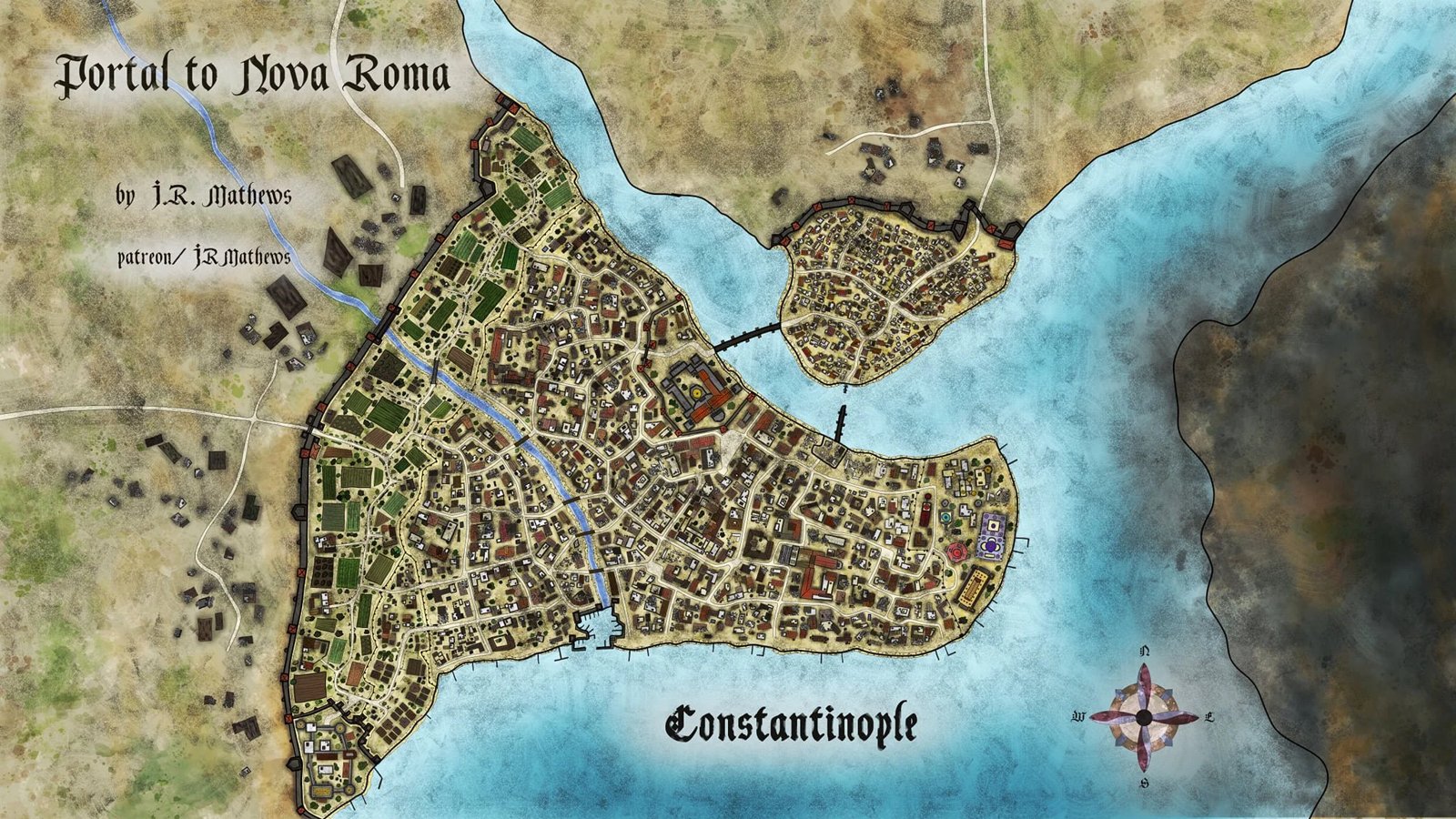
Then Alexander leaves, and the map opens up. The book titles track it: Venice, the Rhine, Paris. Each new place has its own politics, its own version of what survived of Rome, and its own reason to distrust a stranger who arrives with too many good ideas. The alternate history is revealed as Alexander finds it, not dumped in a prologue, and it rewards readers who know the real version.
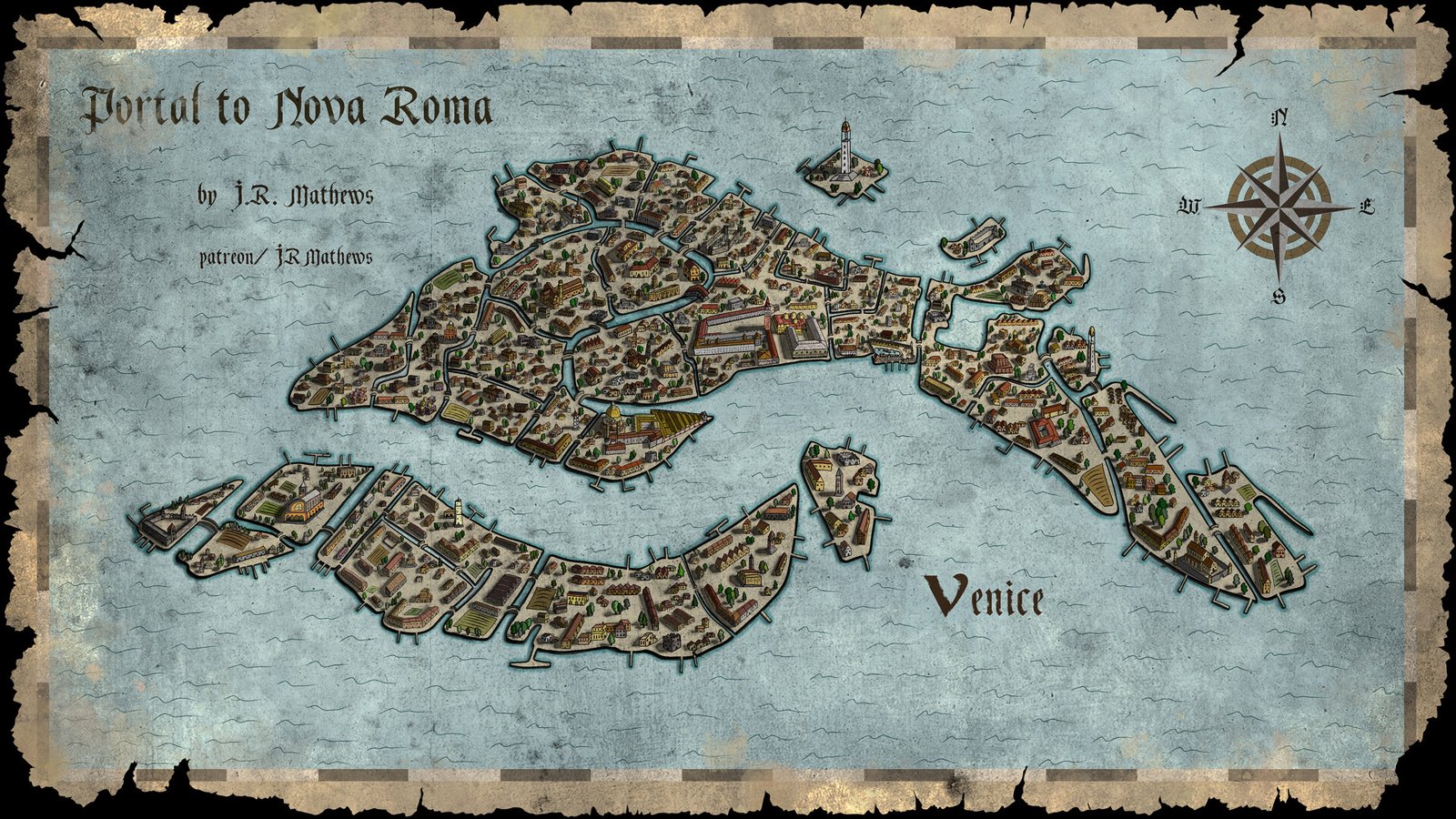
That kind of exploration is rare in kingdom building. Most of the genre sits on one plot of land and builds upwards. Portal to Nova Roma builds outwards, and the world feels bigger and older with every book.
The building is worth the wait
The kingdom building does not arrive straight away. Book 1 is mostly a LitRPG adventure, with the settlement elements showing up around the halfway point. That is the most common question about the series on Reddit, and the honest answer for this Portal to Nova Roma review is that it really starts in Book 2 and gets deeper from there. Even the story itself takes a while: one SPSFC judge put it at about 30% of Book 1 before it found its legs.
When it arrives, it’s good. Training the recruits is the highlight. Alexander takes people who have spent their lives hiding behind walls and turns them into a legion, and the series takes its time with it: drills, failures, the first fight where the training holds. You watch a unit form, which is exactly the kind of slow, costly progress that makes the payoff land.
The founding arcs are the other high point. Having a town, then setting up a new one on an island from nothing, is kingdom building at its most satisfying: a problem list, a population that needs feeding, and a place that visibly changes from one chapter to the next. Modern knowledge and magic work together here, and readers who liked Dr. Stone keep comparing the two for a reason.
The numbers turn him into a one-man army
This is a LitRPG, and it never lets you forget it. Levels, classes, skills, experience and stat blocks run through every book. I could not care less what skills Alexander picked or what his Intelligence is now. In a kingdom building story, the only stats that matter are how many people the town can feed and whether the walls hold. A level-up rarely changes how a scene plays out. It changes a list.
The bigger problem is where the numbers lead. Every book, Alexander gets stronger, and by now he is a one-man army. Readers on Goodreads have noticed: the power creep is real, and he gets every benefit of being an AI with none of the downsides. That is fine for progression fantasy. It is poison for kingdom building. If one man can win the fight, the legion is decoration, and the recruits you spent books training are standing behind him watching. The best kingdom building gives the ruler problems he can’t punch.
Goodreads splits cleanly on this. One camp complains about info-dumps that walk through every option for every new ability. The other camp loves the book for exactly that reason, and sums it up in three words: number go up. If you’re in the second camp, add a point to the score.
The bookkeeping also invites auditing, which is never a good sign. Readers on Reddit have pointed out skills left unclaimed for months for no clear reason, and experience that stops flowing to Alexander’s copies whenever the plot gets busy. Alexander’s character sheet gets more page time than most of his officers. When readers start checking the maths, the numbers have stopped serving the story.
Alexander’s character sheet gets more page time than most of his officers.
Progression Library
Everything happens to Alexander
Alexander is a good narrator. An AI that was never human, slowly finding out it has feelings, is a fresh angle for the genre, and the series handles the darker side of that, war and what it leaves behind, better than you’d expect from the premise.
The problem is that he is the only narrator. The series is told in first person, and nobody else gets a chapter. When Alexander leaves a settlement, the settlement leaves the story. The legion grows, Venice grows, his allies earn new classes, and the reader hears about it afterwards, the same way he does. Readers on Goodreads describe the same thing from the other side: the story skips days, weeks, sometimes months of work and progress, and some stretches read like diary entries. The SPSFC review is blunter. The side characters “definitely feel like side characters”.
It hurts the recruits most. The series spends books turning them into soldiers, then never lets them go out on their own. I want to see a squad run its own hunt, with no Alexander to fix things: pick the target, get it wrong, come back with fewer people or a better plan. That is how you prove the training worked. Instead the recruits only ever fight where Alexander can see them, so they stay students in a story that keeps telling you they’ve graduated.
I wrote about this in detail in what makes a kingdom building novel good: a single POV can build a power base, but it can’t show you a kingdom changing.
Portal to Nova Roma review: the short version
What works
- World building that expands. One walled city in Book 1, then Venice, the Rhine and Paris. Every book makes the world bigger.
- The recruits. Turning frightened civilians into a legion is the best training arc in kingdom building, and the series gives it room.
- Founding towns. The town and the island settlement are where the series is at its best: real problems, solved step by step.
- A different kind of MC. An AI learning to be human gives the first-person voice something to do besides narrate.
What drags
- The slow start. If you came for kingdom building, Book 1 asks for patience. It properly begins in Book 2.
- Too many numbers, and they make him too OP. Stat blocks take up space the town could have used, and the levels turn Alexander into a one-man army who doesn’t need the kingdom he’s building.
- One POV. Nobody but Alexander gets a chapter, so the people the kingdom is for stay in the background.
- The recruits never go it alone. They’re trained for books, but we never see a squad run its own hunt without Alexander there.
- Growth happens off the page. The legion and Venice both grow while Alexander is elsewhere, and you only hear the results.
Where to read it
Every complaint in this Portal to Nova Roma review is easier to live with when Book 1 costs nothing. It has been posting free on Royal Road since February 2026, which is the easiest way to test it. The full series is on Kindle, and Books 1 to 3 are on Audible as an omnibus. If you get through Book 1 and want more building, keep going. That is where the series starts paying out.
Verdict 2.5 / 5
Kingdom building: 2.5 / 5. Progression fantasy: 3 / 5.
The bottom line of this Portal to Nova Roma review: as progression fantasy, the series is solid: a fresh MC, a world that keeps getting bigger and a LitRPG system that at least never stops moving. As kingdom building, it falls short. The recruit training and town founding are worth reading, but the kingdom only ever exists where Alexander is standing, and the people he builds it with never get to act without him. Read it for the world and the founding arcs, skim the stat blocks, and if kingdom building is what you’re after, start with the best kingdom building novels.